How to Balance Protein, Carbs, and Fat for Weight Loss
Counting calories is step one. But to lose fat and keep it off, you need to understand macros. Here is a beginner's guide to balancing protein, carbs, and fat.
A calorie is not just a calorie
So, you've calculated your BMI and figured out your TDEE (Total Daily Energy Expenditure). You know exactly how many calories you need to eat to reach your goal weight.
But here is the truth: a calorie is not just a calorie.
If you eat 1,500 calories of candy, you will feel hungry, tired, and you'll likely lose muscle instead of fat. If you eat 1,500 calories of chicken, rice, and vegetables, you will feel full, energetic, and burn fat efficiently.
To get the results you want, you need to look beyond calories. You need to balance your macronutrients — commonly called "macros." In this beginner's guide, we'll break down the three main macronutrients and show you exactly how to balance them for successful weight loss.
Need to recalculate your daily calorie needs first? Go back and calculate your TDEE here.
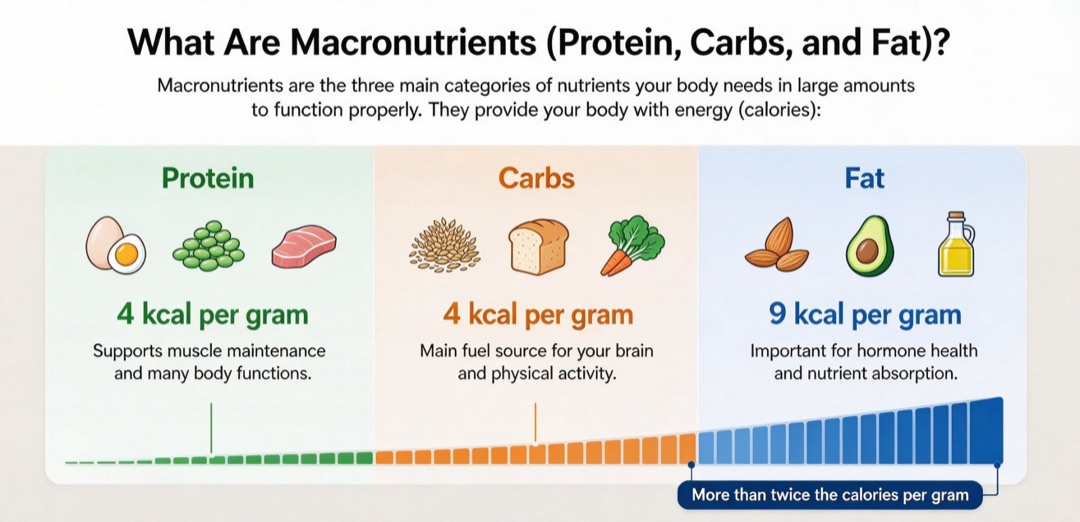
What Are Macronutrients (Protein, Carbs, and Fat)?
Macronutrients are the three main categories of nutrients your body needs in large amounts to function properly. They provide your body with energy (calories):
Why the Right Balance Matters for Weight Loss
Why can't you just eat whatever you want as long as you hit your calorie goal? Here is how each macronutrient affects your body:
1. Protein (The Fat-Fighting Hero)
Protein takes the most energy to digest (burning up to 30% of its own calories!). It also keeps you feeling full the longest and preserves your muscle mass while you lose weight.
Best sources: Chicken breast, lean beef, fish, eggs, tofu, Greek yogurt.
2. Carbohydrates (The Energy Source)
Carbs are your body's preferred energy source, especially for your brain and workouts. However, not all carbs are equal. Simple carbs (sugar, white bread) digest quickly and spike your blood sugar, making you hungry again fast. Complex carbs (oats, brown rice, vegetables) digest slowly and provide steady energy.
Best sources: Oats, brown rice, quinoa, sweet potatoes, fruits, vegetables.
3. Fat (The Hormone Regulator)
Fat is essential for producing hormones, absorbing vitamins, and keeping your brain healthy. But because it has 9 calories per gram, you only need a little bit of it.
Best sources: Olive oil, avocados, nuts, seeds, fatty fish (like salmon).
How to Calculate Your Perfect Macro Split
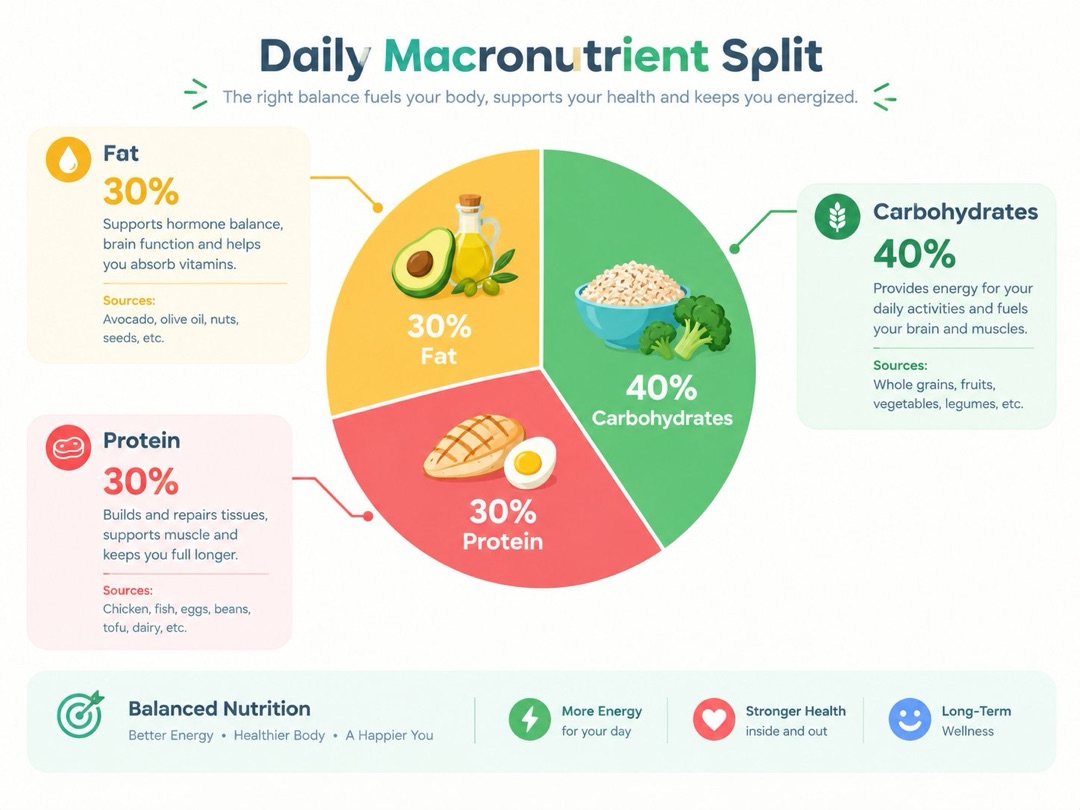
Now that you know your daily calorie goal (from your TDEE), you can divide those calories into macros. For general weight loss, a balanced and sustainable starting point is:
Worked example
If your TDEE is 2,000 calories per day and you want to lose weight, let's say you set a daily target of 1,800 calories:
- Protein (30% of 1,800): 540 calories ÷ 4 = 135 g of protein per day
- Carbs (40% of 1,800): 720 calories ÷ 4 = 180 g of carbs per day
- Fat (30% of 1,800): 540 calories ÷ 9 = 60 g of fat per day
How to Translate Macros into Real Food
Here is the hardest part for most people: you have your numbers (135 g protein, 180 g carbs, 60 g fat), but what does that look like on a plate?
You cannot guess this. If you guess, you will likely eat too much fat and not enough protein.
You must track your food. This is exactly why we built our Food Calorie Database. You can search thousands of foods (based on the latest USDA Foundation Foods data) to see exactly how many grams of protein, carbs, and fat they contain. Instead of guessing, you can build your daily meals with precision.
Try our Free Food Calorie Tool here to see the macros in your next meal.
Frequently Asked Questions
Do I have to count macros forever?
No. Most people count macros strictly for 2–3 months. Eventually, you will learn what a portion of chicken or rice looks like, and you can stop tracking so intensely.
What if I hit my calories but miss my protein goal?
You will likely lose weight, but a lot of that weight will be muscle, not fat. This leads to a "skinny fat" look and a slower metabolism. Try to hit your protein goal first every day.
Are carbs bad for weight loss?
Absolutely not. You need carbs for energy. The key is choosing complex carbs (vegetables, whole grains) over simple carbs (soda, candy).
The Takeaway
Balancing your protein, carbs, and fat is the secret to losing fat without feeling miserable. It takes a little math and a little tracking, but the results are absolutely worth it.
Disclaimer: This article is for informational purposes only and does not constitute medical advice. Always consult with a healthcare provider before starting any new diet or exercise regimen.