Stop Drinking Your Calories: The Hidden Trap of Liquid Calories
Struggling to lose weight despite eating healthy? Liquid calories from sodas, juices and fancy coffees might be the hidden culprit. Here's how to spot them — and what to drink instead.
You Eat Well — So Why Isn't the Scale Moving?
You've been doing everything right. You meal-prepped your lunches, you're eating more protein, and you're staying within your calorie deficit. Yet the scale refuses to move.
Here is a question for you: what are you drinking?
Most people meticulously track their food but completely forget to track their beverages. A quick morning latte, a glass of orange juice with breakfast, or a soda with dinner can easily add 500–800 hidden calories to your day — without making you feel any fuller.
In this guide, we'll expose the hidden trap of liquid calories and show you exactly how to fix it without giving up your favorite drinks.
First, make sure you know your daily calorie limit: use our free TDEE Calculator here.
Why Are Liquid Calories Worse Than Food Calories?
If a 200-calorie slice of bread and a 200-calorie soda have the same calories, what's the difference?
The difference is satiety — how full you feel.
When you eat solid food, your body releases hormones that tell your brain you are full. But when you drink calories, they pass through your stomach in seconds. Your brain doesn't register them as "food," so you end up eating the exact same amount of solid food later in the day. You are essentially drinking extra calories on top of your normal diet.
The 4 Worst Offenders (And Their Real Calorie Counts)
Let's look at the biggest culprits that sabotage weight loss:
1. Fancy Coffee Drinks
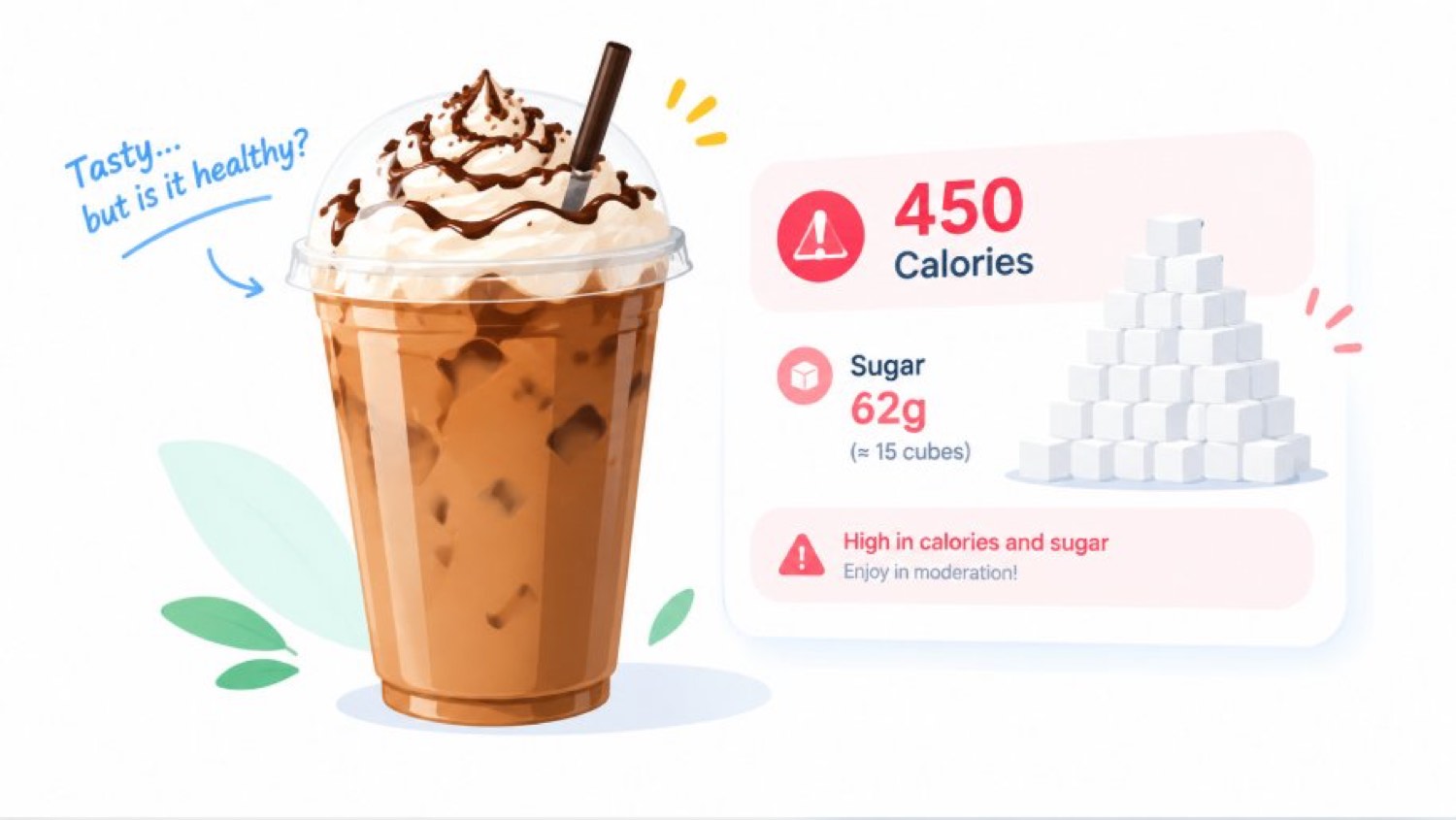
A plain black coffee has about 2 calories. But a large Caramel Frappuccino with whipped cream? That's a milkshake in disguise. It can easily pack 400–500 calories and 60 g of sugar.
2. Fruit Juice & Smoothies
Juice is nature's candy. The juicing process strips away the fiber from the fruit, leaving behind mostly sugar. Drinking a glass of apple juice is like eating three apples at once — without any of the fullness.
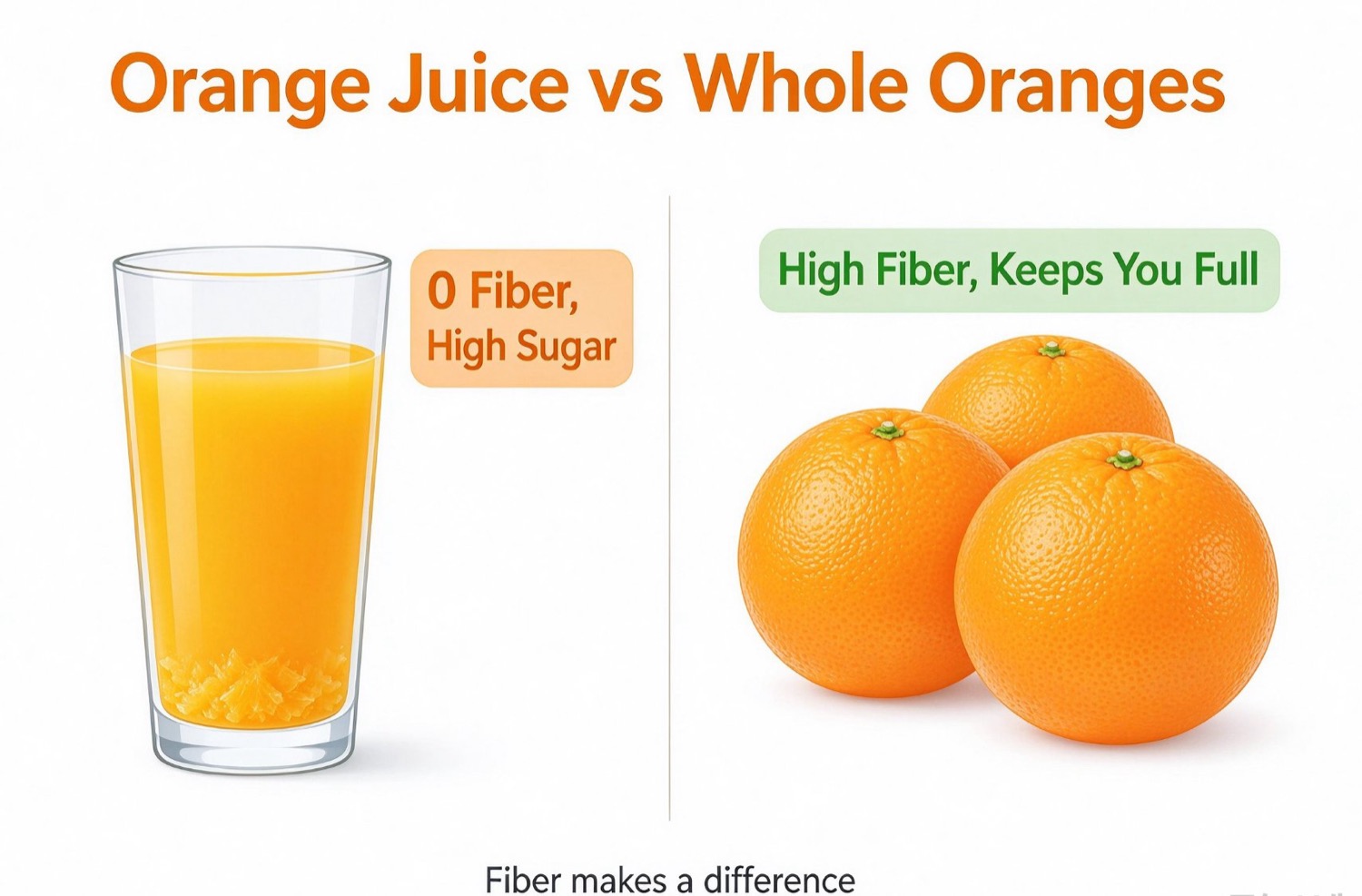
The fix: Eat the whole fruit instead. If you make smoothies, add protein powder or Greek yogurt to balance the macros.
3. Regular Soda & Sweet Tea
A standard can of Coca-Cola has 39 g of sugar and 140 calories. If you drink two a day, that's an extra 280 calories daily — enough to add up to nearly 30 lbs (13 kg) of weight gain over a year.
4. Alcohol
Alcohol carries 7 calories per gram — not far behind fat at 9. On top of that, drinking lowers your inhibitions, making you much more likely to order late-night junk food. A single margarita can have 300+ calories.
Want to see the exact sugar and calorie breakdown of your favorite drink? Search our Food Calorie Database now.
The "Fake Healthy" Drinks You Must Avoid
Just like we discussed in our "Fake Healthy" Foods guide, the beverage industry uses clever marketing. Be careful with:
- Vitamin waters: usually packed with added sugar.
- Flavored iced teas: often contain just as much sugar as soda.
- "Natural" energy drinks: high in sugar and empty calories.
How to Track Your Drinks (Without the Guesswork)
How do you know if your favorite bottle of iced tea or protein shake is secretly ruining your diet? You look at the numbers.
This is exactly why we built our Camera Barcode Scanner.
Next time you are in the grocery store or a convenience shop, don't trust the front of the bottle. Simply open our website, click the camera icon, and scan the barcode on your drink. In a couple of seconds, our database pulls up the real calories, sugar, and macros — with a Low / Medium / High sugar rating so you don't have to interpret anything. It is the fastest way to make sure you aren't drinking your daily calorie deficit away.
Test it out right now: scan a soda bottle from your fridge and see the results.
What Should You Drink Instead?
Swapping high-calorie drinks for low-calorie alternatives is the easiest way to create a calorie deficit without feeling hungry.
| Drink | Why it works |
|---|---|
| Water | The ultimate zero-calorie drink. Add lemon, cucumber or mint if you find it boring. |
| Sparkling water | Great if you miss the "fizz" of soda. |
| Black coffee & plain tea | Nearly zero calories and packed with antioxidants. |
| Diet sodas (zero sugar) | Not a "health food," but a useful tool to transition away from regular sugar. |
| Skim milk or unsweetened almond milk | Much lower in calories than whole milk or oat milk. |
Frequently Asked Questions
Do diet sodas make you gain weight?
There is no strong scientific evidence that zero-calorie sweeteners cause weight gain directly. However, they might make you crave more sweets. Everything in moderation.
Are protein shakes good for weight loss?
Yes, but only if they fit your macros. Some protein shakes are loaded with sugar. Look for whey protein isolate or vegan blends with less than 3 g of sugar per serving.
How do I check how much sugar is really in a bottled drink?
Scan its barcode with the free BMIbite Barcode Scanner. In a couple of seconds it shows the real calories and sugar per 100 ml, with a Low, Medium or High sugar rating based on official thresholds. For basic ingredients like milk or fruit, use the USDA-powered Food Calorie Database instead.
The Bottom Line
The easiest calories to cut are the ones you drink. By swapping sugary sodas and fancy coffees for water or black coffee, you can save hundreds of calories a day effortlessly.
Before you take your next sip, make sure you know what's inside! Grab a bottle from your fridge and try our Barcode Scanner right now.