7 "Healthy" Foods That Are Secretly Ruining Your Diet
Think you're eating healthy? Think again. These seven "fake healthy" foods are packed with hidden calories and sugar — here's how to spot the truth, and the fastest way to track the real numbers.
The "Health Halo" Trick
You're doing everything right. You swapped your burgers for salads, your soda for fruit juice, and your chips for granola bars. Yet the scale refuses to budge.
What's going on? You've fallen for the "Health Halo" effect — a marketing trick where food companies slap words like "natural," "organic," or "low-fat" on the packaging to make you think a product is healthy.
The truth is, many of these "health foods" are packed with just as much sugar, fat, and hidden calories as junk food. Here are 7 foods that are secretly ruining your diet, and how to spot the truth.
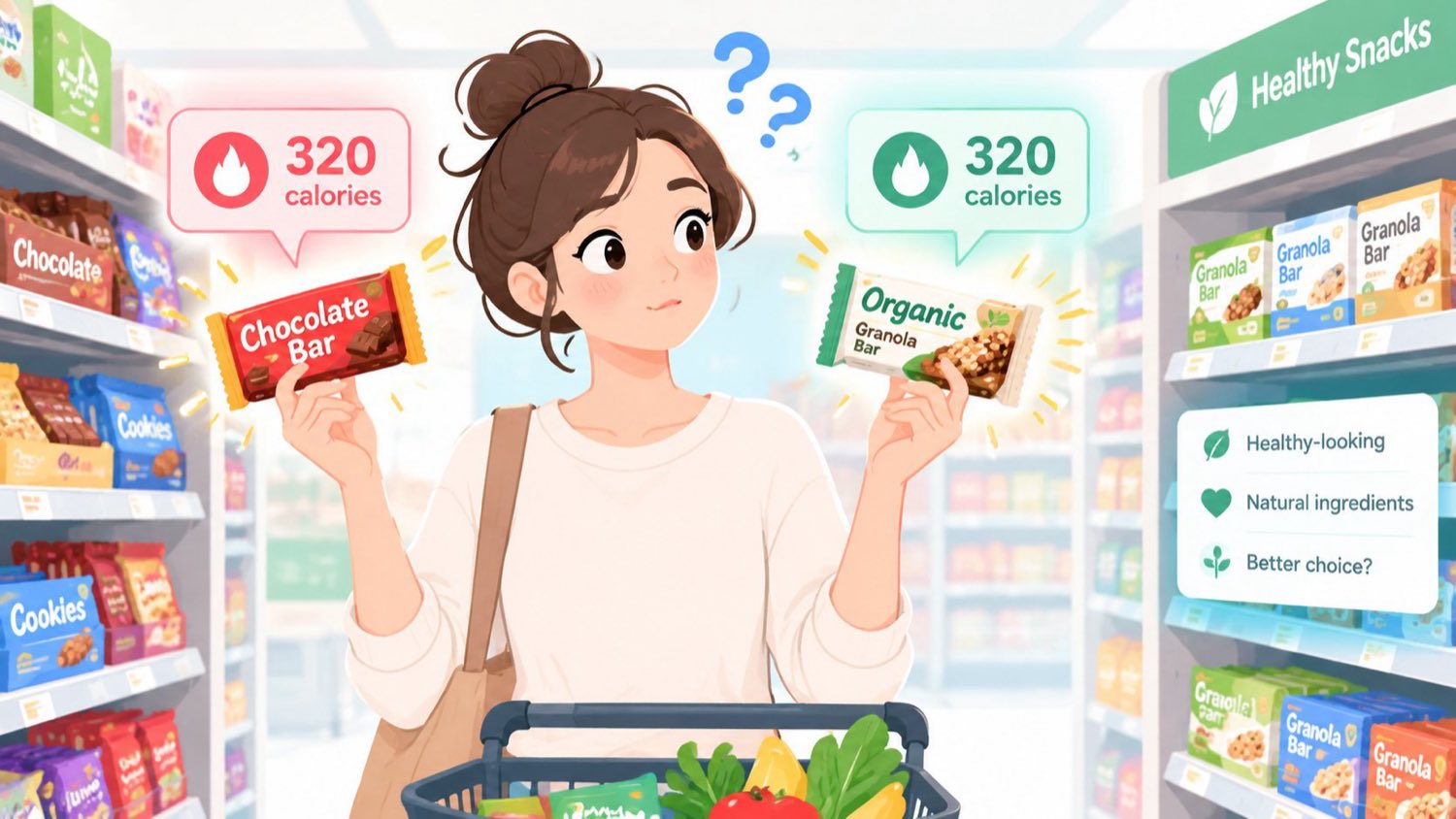
Want to check whether your own pantry is safe? Search the food in our Calorie Database here.
The 7 "Fake Healthy" Foods to Watch Out For
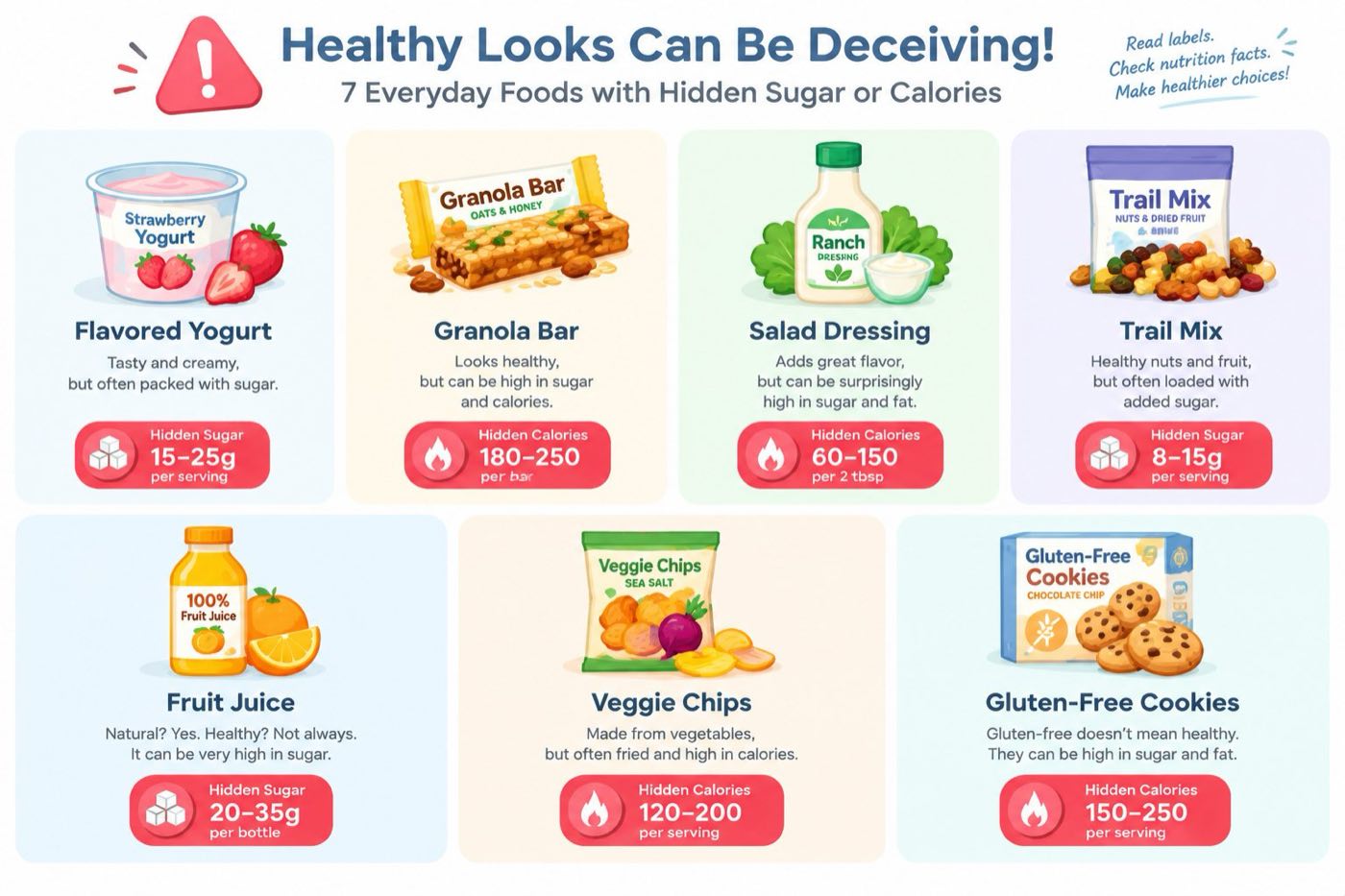
1. Flavored Yogurt
Yogurt is great for gut health, but flavored fruit yogurts are basically desserts. A single cup can contain up to 20 grams of added sugar — almost your entire daily limit!
The fix: Buy plain Greek yogurt and add your own fresh berries or a teaspoon of honey.
2. Granola and Energy Bars
They look like they belong in a nature magazine, but granola is usually baked with large amounts of oil and sugar to make it crunchy and sweet. One small granola bar can easily hit 200+ calories and 15 g of fat.
The fix: Treat them as a dessert, not a daily breakfast — or look for bars with less than 5 g of added sugar.
3. Salad Dressings
You order a giant bowl of leafy greens, but then you drown it in ranch or honey mustard. Just two tablespoons of some dressings can add 150–200 calories and 20 g of fat to your "healthy" salad.
The fix: Use olive oil and vinegar, or ask for a light vinaigrette on the side.
4. Trail Mix (Dried Fruit and Nuts)
Nuts are healthy, but they are also extremely calorie-dense. When you add sugary dried cranberries and chocolate chips, a small handful can easily pack 300 calories.
The fix: Measure out a strict quarter-cup portion instead of eating straight from the bag.
5. Fruit Juice and Smoothies
Juicing removes the fiber from fruit, leaving you with a liquid that is mostly sugar. It spikes your blood sugar and leaves you hungry again 30 minutes later.
The fix: Eat whole fruits. If you love smoothies, make them at home with whole fruit and protein powder — not juice.
6. Veggie Chips (Potato Chips in Disguise)
Veggie sticks and "veggie straws" are often made mostly of potato starch and oil. They have virtually the same calories and fat as regular potato chips.
The fix: If you want veggies, eat real sliced carrots or cucumber with hummus.
7. Gluten-Free Snacks
Unless you have celiac disease, "gluten-free" doesn't automatically mean healthy. Many gluten-free cookies and crackers use extra sugar and refined starches to make up for the taste and texture of wheat.
The fix: Stick to naturally gluten-free whole foods like rice, quinoa, and potatoes.
How to Stop Guessing and Start Tracking (The Fast Way)
So how do you avoid these traps? The golden rule is simple: never trust the front of the package — always look at the back.
But let's be honest: reading those tiny, confusing nutrition labels in the grocery store aisle is exhausting, and calculating "per serving" versus "per package" in your head is a recipe for a headache. That's exactly why we built our tools:
1. For Whole, Basic Foods: Use the USDA Search Tool
If you are cooking at home with chicken breast, rice, or fresh vegetables, you don't need a label. Just type the food name into our free Food Calorie Database. Powered by the latest USDA data, it gives you the exact calories and macros per 100 g instantly. (New to calories? Start with how to calculate your TDEE.)
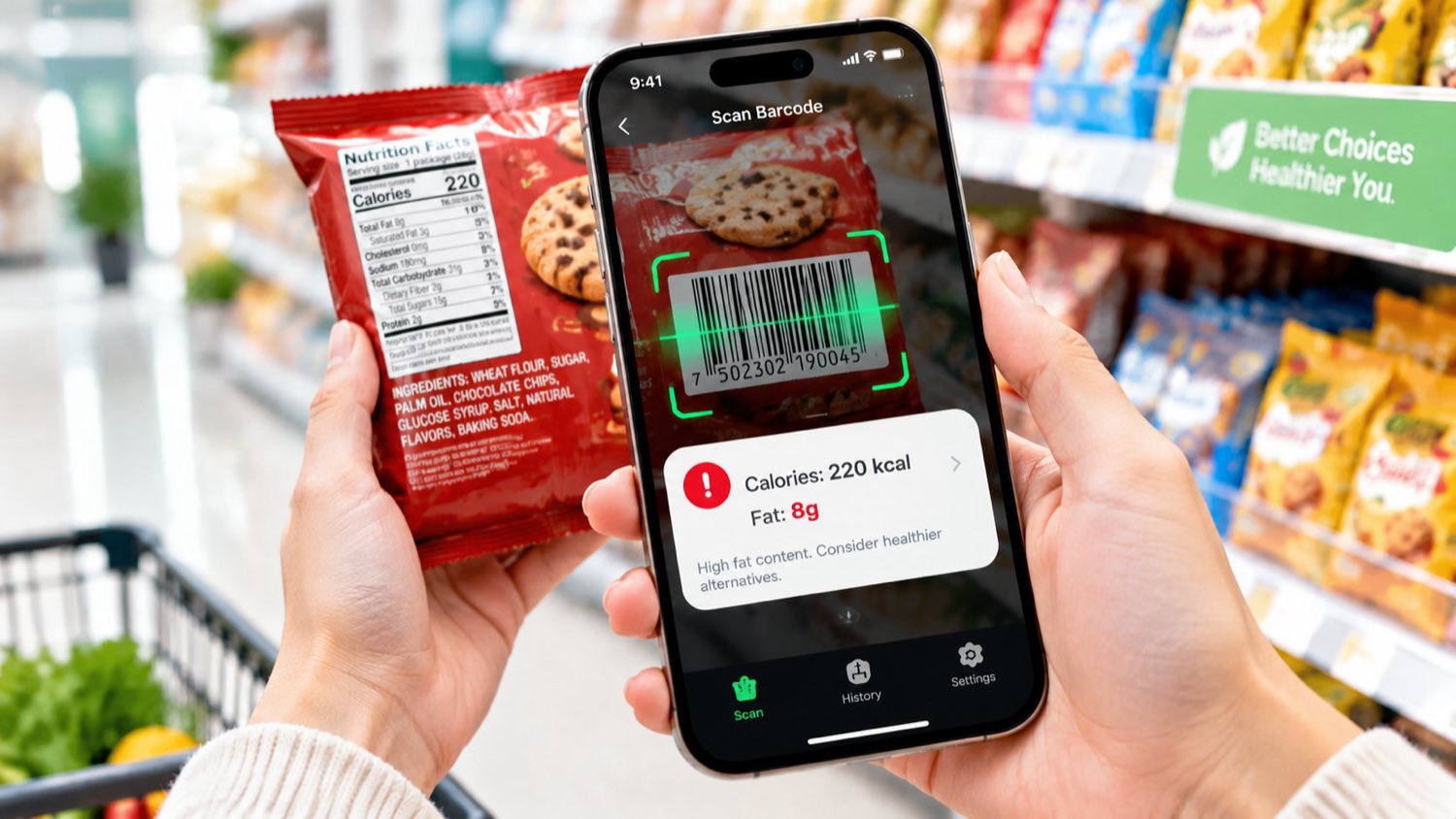
2. For Packaged Foods: Use the Camera Barcode Scanner
This is our brand-new feature! If you are standing in the supermarket and want to know whether that "healthy" granola bar is actually good for you, you don't need to read the tiny text anymore. Simply open the Barcode Scanner on our website, point your camera at the barcode on the packaging, and it reads the number for you.
In a couple of seconds, the scanner (powered by the Open Food Facts database) pulls up the real calories, protein, carbs, and fat per 100 g. No typing. No guessing. Just scan and know the truth.
Frequently Asked Questions
Is "organic" always healthier?
No. Organic candy is still candy. Organic only describes how the ingredients were farmed; it doesn't change the calorie or sugar content.
Why do food companies hide the sugar?
They use several different names for sugar — high-fructose corn syrup, cane sugar, agave nectar and more — so that sugar doesn't appear first on the ingredients list, and the product reads as healthier than it really is.
What is the fastest way to check a packaged food's real nutrition?
Scan its barcode with the free BMIbite Barcode Scanner. It reads the number, looks the product up in the Open Food Facts database, and shows the real calories, protein, carbs and fat per 100 g in a couple of seconds. For unbranded ingredients like chicken breast or rice, use the USDA-powered Food Calorie Database instead.
The Bottom Line
Don't let clever marketing derail your hard work. The next time you go grocery shopping, arm yourself with knowledge: read the label on the back, watch out for the health halo, and let the numbers — not the packaging — make the decision.
Ready to test it out? Grab a snack from your kitchen right now, scan it, and see whether it passes the test!