The Ultimate Guide to Eating Out: How to Stay on Track Without Being "That Person"
Think you can't lose weight while eating out? Think again. Proven strategies to navigate restaurant menus and fast food — plus the easiest way to track the hidden calories.
Eating Out Shouldn't Mean Giving Up
Let's be honest: cooking at home every single day is exhausting. Sometimes you want to grab a coffee with friends, order a pizza on a Friday night, or just pick up a quick lunch on the way.
But when you're tracking your BMI, your TDEE, and your macros, the idea of eating out can cause instant anxiety. "How many calories are in this?" "Did they cook this in a bucket of butter?"
The good news is, eating out doesn't have to derail your progress. You don't need to order a plain side salad while your friends eat burgers. You just need a strategy. Here is your ultimate survival guide to eating out without blowing your daily calorie budget.

The 3 Golden Rules of Dining Out
Before we look at specific foods, you need to master these three rules:
- Pre-game the menu. Most restaurants publish their menus online. Look at it before you arrive (or before you order on Uber Eats). Decide what you're going to eat while you're calm, full, and not influenced by hunger or peer pressure.
- Beware the word "crispy." In the kitchen, "crispy," "battered," "breaded," or "glazed" usually means "dipped in oil and sugar." Stick to words like grilled, baked, steamed, roasted, or seared.
- The "half-and-half" rule. If you really want the fries, that's fine — but eat half the portion and swap the other half for a side salad or steamed vegetables.
Navigating Fast Food & Takeout (The Good, the Bad, the Ugly)
Fast food is actually easier to track because the menus are standardized. Here's how to survive the popular takeout categories:
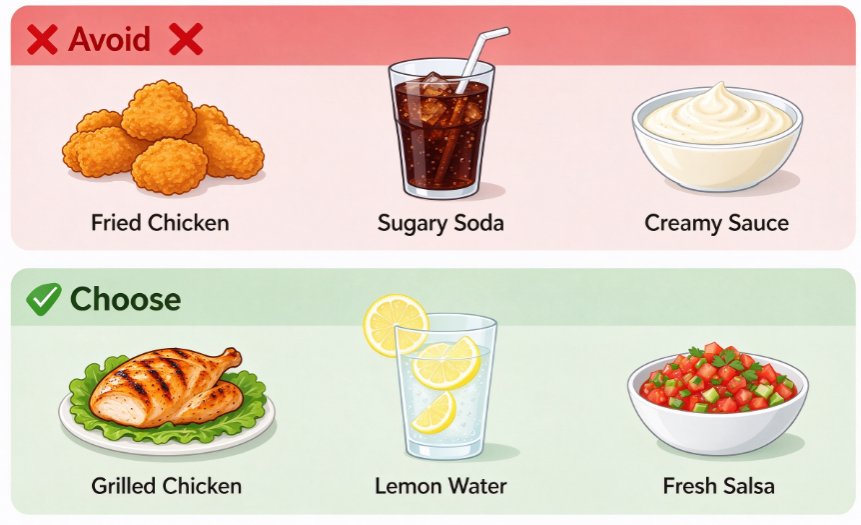
Burgers & Fast Food
Skip the double patties, the mayo, and the sugary sodas. A single-patty burger without mayo, paired with a diet soda and a small order of fries, is perfectly manageable calorie-wise.
Mexican Food
Chipotle-style bowls can be amazing for macros! Choose chicken or steak, brown rice, black beans, fajita veggies, and salsa. Skip the sour cream, the cheese, and the tortilla chips.
Asian Takeout
Choose steamed rice instead of fried rice, and look for dishes built around lean protein and vegetables (like chicken and broccoli). Avoid anything described as "sweet and sour," "General Tso's," or "tempura" — these are deep-fried and coated in sugar syrup.
Pizza
Thin crust is always better than deep dish. Stick to two slices, add a side salad, and blot off the excess oil from the top if needed.
The Hidden Danger: Convenience Store Snacks
Sometimes you're on the road and your only option is a gas station or a 7-Eleven. This is where people usually panic and buy a giant bag of chips or a candy bar.
How do you know if that pre-packaged sandwich or protein bar is actually good for you? The front label will shout "High Protein!" — but the back label might be hiding 30 g of sugar.
This is exactly why we built our new Camera Barcode Scanner. Instead of squinting at tiny nutrition labels, just open our website, point your camera at the barcode on the package, and scan. In a couple of seconds, you'll see the real calories, protein, and fat. It's the ultimate cheat code for grocery stores and convenience shops.
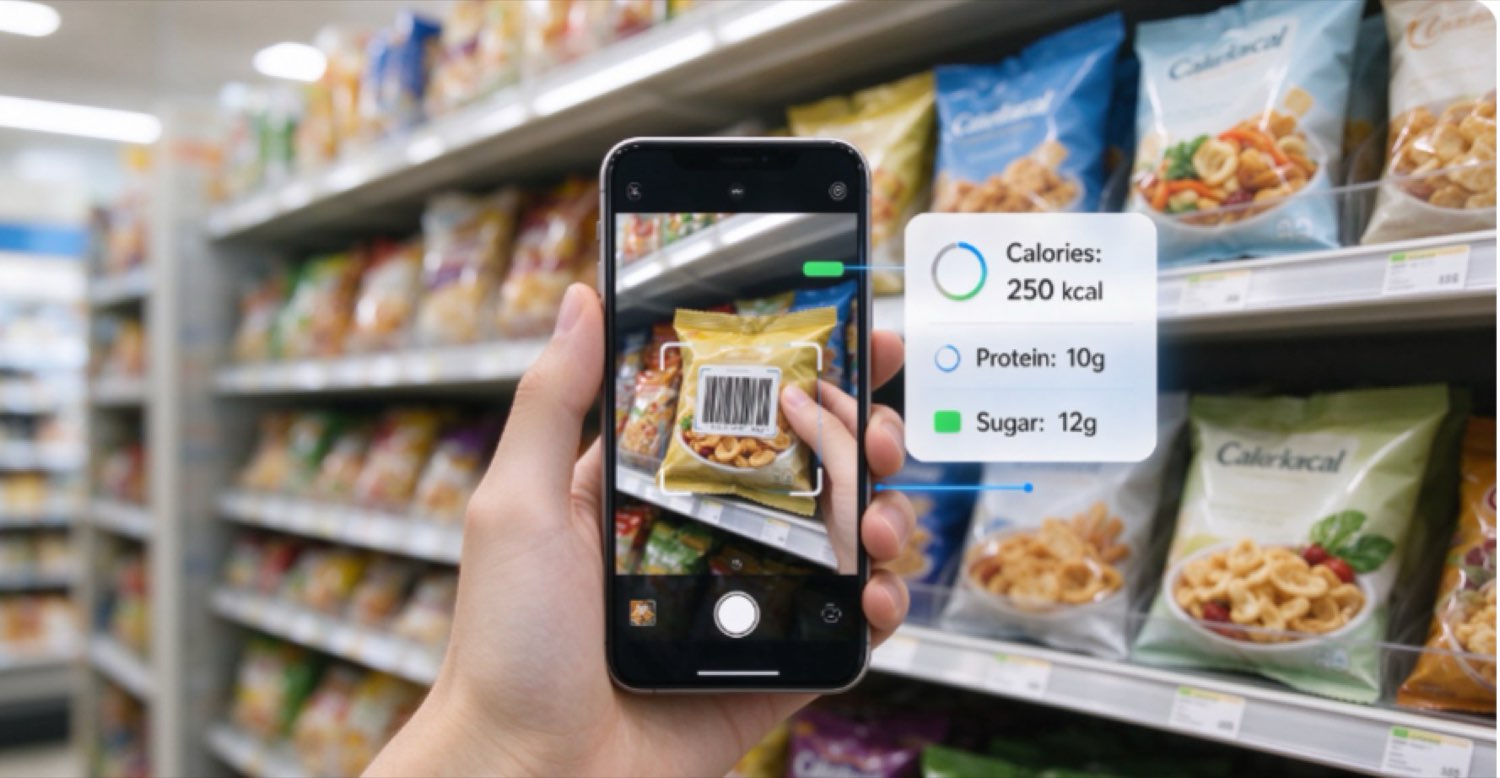
Want to check a snack you already have at home? Search our Calorie Database here to see the truth behind your favorite treats.
What About the Restaurant Meal Itself?
What if you're at a local restaurant that has no barcode and no calorie menu?
You have to become a master of estimation. Use your knowledge of macros to break down your plate:
| Component | Hand portion | Approximate amount | Calories |
|---|---|---|---|
| Protein (meat/fish) | Palm of your hand | 100–150 g | ~165–250 kcal |
| Carbs (rice/pasta/potato) | Clenched fist | ~1 cup cooked | ~200 kcal |
| Fats (oil/sauces) | Your thumb | ~1 tablespoon | ~120 kcal |
If you want to be more accurate, use our USDA-powered Food Calorie Database. Search for "chicken breast, grilled" or "white rice, cooked" and build up an estimate of your restaurant meal. It's not perfect, but it keeps you accountable.
Frequently Asked Questions
Is it okay to have a cheat meal?
Yes! One meal will not ruin your progress. The problem is when a "cheat meal" turns into a "cheat weekend." Get right back on track with your calorie goal the very next morning.
How do I handle peer pressure?
You don't have to announce you're on a diet — just order confidently. If someone asks why you're not getting the fried chicken, say, "I'm really craving the grilled salmon today." Keep it simple.
How do I estimate calories when the restaurant has no nutrition info?
Use your hand as a portion guide: a palm of meat or fish is roughly 100–150 g (about 165–250 calories), a fist of rice or pasta is about 1 cup (roughly 200 calories), and a thumb of oil or butter is around 120 calories. For exact ingredient values, check the Food Calorie Database.
The Bottom Line
Eating out is part of a normal, happy life. You shouldn't have to lock yourself in your house to lose weight. By applying the golden rules, making smart swaps, and using technology to check the real numbers, you can enjoy your meal and still hit your goals.
Next time you're at the store or unpacking your groceries, grab your phone and try our Barcode Scanner or Food Search Tool to see what's really inside your food!