The Ultimate Guide to Calorie Deficit: How to Lose Weight Sustainably
What a calorie deficit really is, how to calculate yours correctly, and the common mistakes that quietly ruin it — so you can lose weight without feeling hungry, miserable and exhausted.
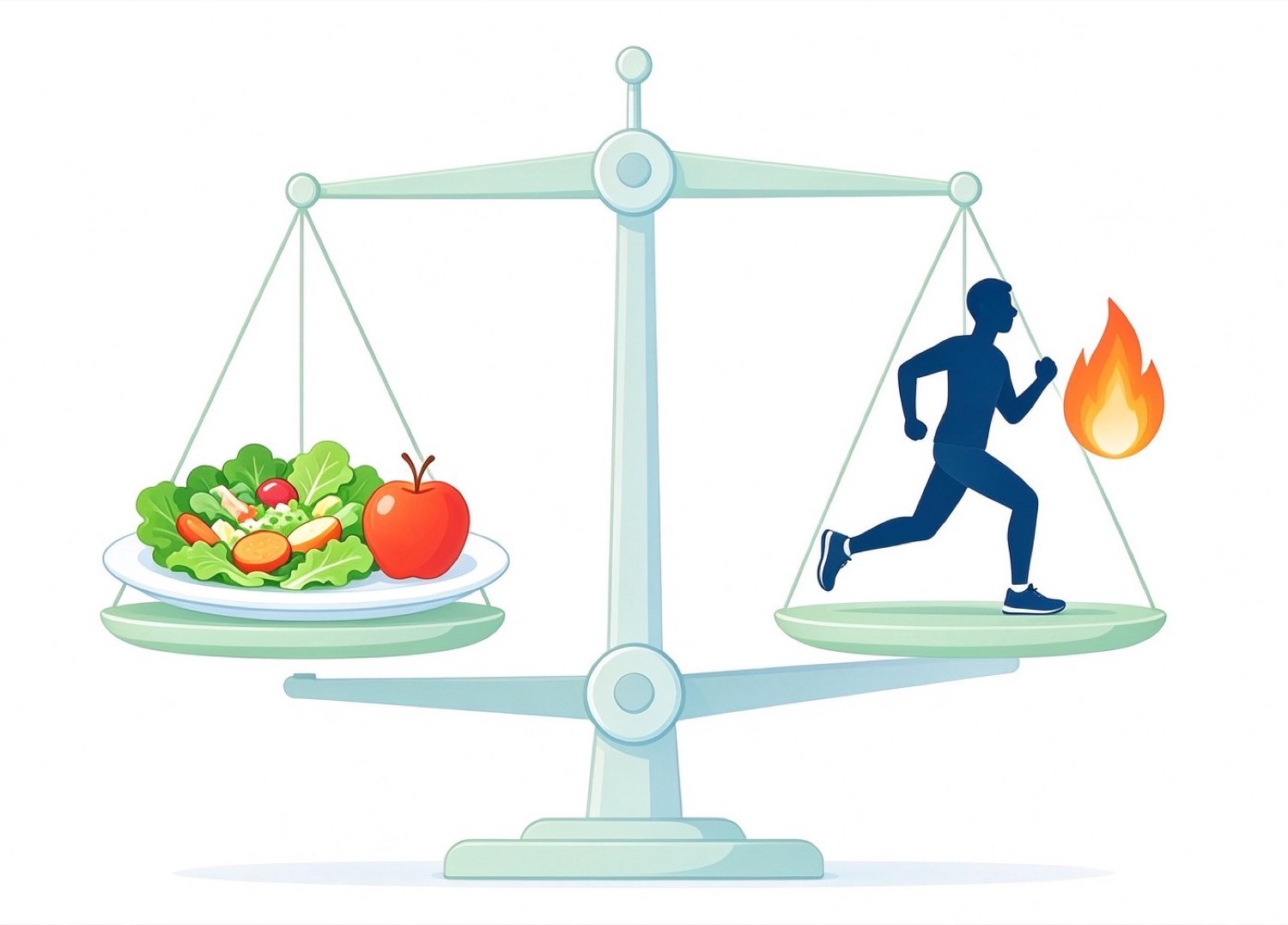
If you have ever tried to lose weight, you've probably heard the phrase: "You need to be in a calorie deficit."
But what does that actually mean? And more importantly, how can you do it without feeling hungry, miserable, and exhausted all the time?
In this guide, we'll break down the science of a calorie deficit, how to calculate yours correctly, and the common mistakes to avoid.
What Is a Calorie Deficit?
In the simplest terms, a calorie deficit occurs when you consume fewer calories than your body burns over a period of time.
Every day, your body burns calories just by existing — breathing, circulating blood, and repairing cells. This is called your Basal Metabolic Rate (BMR). When you add daily movement, exercise, and digesting food, you get your Total Daily Energy Expenditure (TDEE).
- Eat more than your TDEE: you gain weight.
- Eat exactly your TDEE: you maintain weight.
- Eat less than your TDEE: you are in a calorie deficit, and you lose weight.
Why Calorie Deficit Is the Only Thing That Works
There are hundreds of diets out there — Keto, Intermittent Fasting, Paleo, Vegan. They all claim to be the "magic secret" to weight loss.
But here is the truth: they all work for the exact same reason. They put you in a calorie deficit.
Keto works because cutting carbs reduces your total calorie intake. Intermittent fasting works because eating in a smaller time window naturally makes you eat fewer calories.
If you don't create a deficit, you will not lose fat. It's basic physics.
How Big Should Your Deficit Be? (The Sweet Spot)
You might think, "If eating 500 calories less helps me lose weight, eating 1,500 calories less will make me lose it three times as fast!"
Do not do this.
Crashing your calories leads to muscle loss, nutrient deficiencies, extreme fatigue, and a slower metabolism. It is also unsustainable and usually leads to binge eating.
The Healthy Range
- A safe and sustainable deficit is 300 to 500 calories per day.
- This will result in a healthy weight loss rate of about 0.5 to 1 lb (0.25 to 0.5 kg) per week.
- Never drop below 1,200 calories per day for women, or 1,500 for men, unless supervised by a doctor.
3 Common Mistakes That Ruin a Calorie Deficit
Even if you know the math, the real world is messy. Here are three reasons people fail to lose weight even when they think they are in a deficit:
1. Underestimating Portion Sizes
Studies show that humans are terrible at guessing how much they eat. That "small handful of nuts" or "splash of cooking oil" can easily add 300 hidden calories to your day.
Action: Track your food for at least a week using a scale or the barcode scanner to understand true portion sizes.
2. Falling for "Healthy" Food Traps
Just because a product is labeled "organic" or "gluten-free" doesn't mean it's low in calories. Many processed "health foods" are packed with sugar and oils.
Action: Read our guide on Fake Healthy Foods to avoid these sneaky traps.
3. Drinking Your Calories
Sodas, fancy lattes, fruit juices, and alcohol can add up to hundreds of calories without making you feel full.
Action: Read our article on Liquid Calories to see what you should swap them for.
How to Make the Deficit Easier
Eating less doesn't have to mean feeling starving. Here are a few tricks to make your deficit feel effortless:
- Prioritize Protein: Protein keeps you full longer and helps preserve muscle mass. Aim for lean meats, eggs, tofu, and Greek yogurt — see our list of 10 high-protein foods that keep you full.
- Eat High-Volume Foods: Foods with high water and fiber content (like vegetables, fruits, and soups) fill up your stomach for very few calories.
- Walk More: Instead of starving yourself to create a deficit, move more. A 30-minute brisk walk can burn 150–200 calories.

Frequently Asked Questions
Is a 500-calorie deficit right for everyone?
For most adults a 300 to 500 calorie daily deficit is a safe starting point, but the right number depends on your size, activity level and health status. Smaller or very active people may need a smaller deficit; always avoid going below 1,200 kcal per day for women or 1,500 kcal for men without medical supervision.
Can I lose weight without a calorie deficit?
No. Every effective diet works by creating a calorie deficit, whether through food choices, meal timing or exercise. If you consistently eat fewer calories than you burn, you lose weight; if you do not, you will not lose fat.
How fast will I lose weight on a 500-calorie deficit?
A daily deficit of about 500 calories typically produces weight loss of roughly 0.5 to 1 lb (0.25 to 0.5 kg) per week. Early weeks may show faster results from water weight, then the rate usually settles into that sustainable range.
Conclusion
A calorie deficit isn't a diet; it's the biological mechanism behind all weight loss. By understanding your daily calorie needs, creating a moderate deficit, and avoiding hidden calorie traps, you can lose weight sustainably without giving up the foods you love.